


I have clematis envy.
Lovingly tethered to the fence, my neighbours' clematis nod their downy purple heads in the summer breeze, and my heart grieves for the terrible state of my own clematis. They’re thin and weedy, giving up the ghost after a few pathetic years. I don’t know what I’m doing wrong.
Wheeling through the council estates, where I live, the dog and I pause to nose over gates and fences. There are some beautiful gardens around here, although not many would believe it.
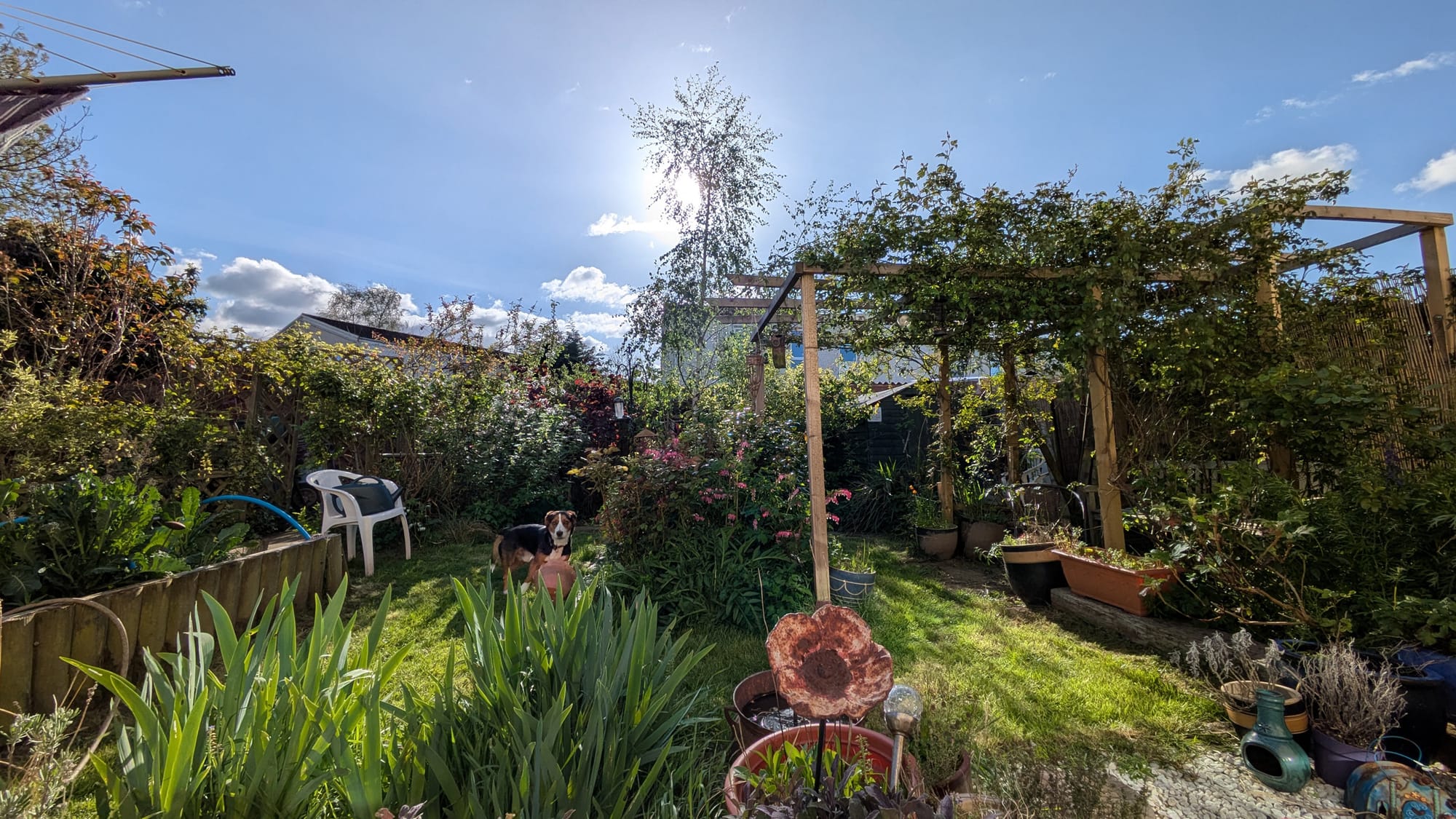
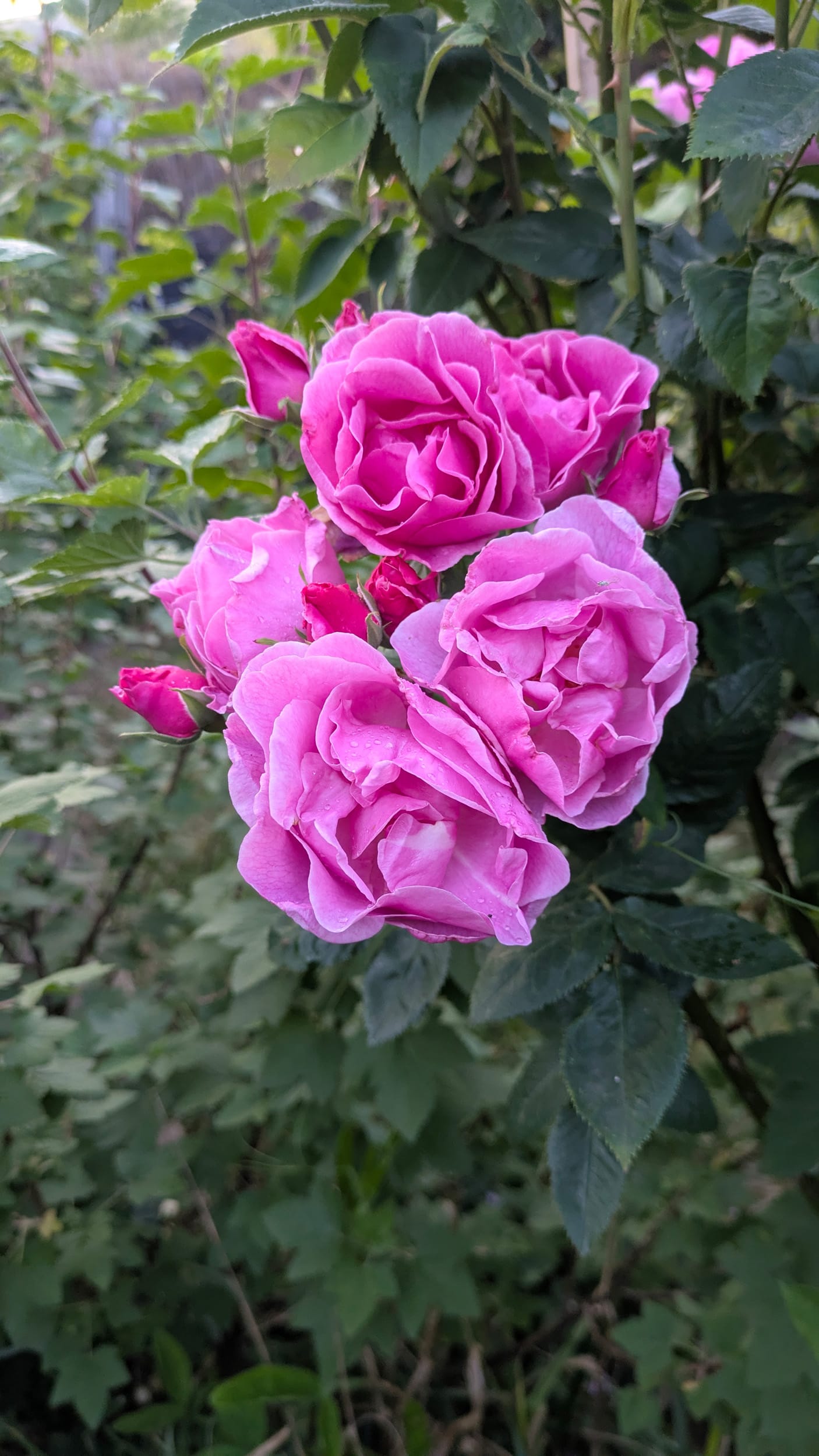
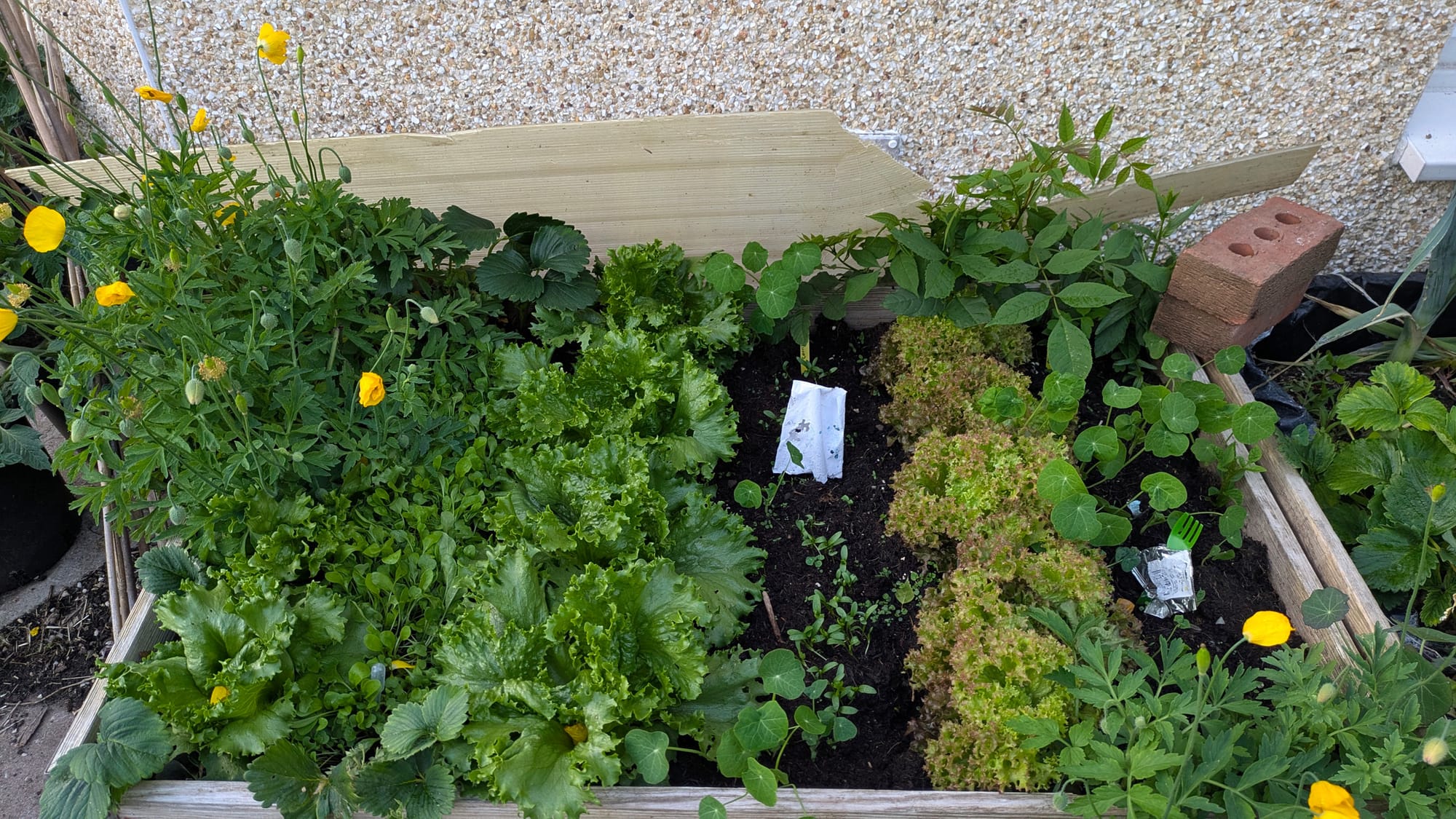
When I say I live in a council house, people think woodchip wallpaper and yards with a decorative mattress or sagging sofa growing amongst the weeds. They don’t think of sprawling roses or ornamental trees. They don’t think raised beds full of walking stick kale or free roaming raspberries, canes bent double with the weight of glistening fruits.
What is the image that comes to mind when you think council estate? Is it grubby alleyways from some procedural drama, or maybe real-life crime viewed on the telly from behind a police line?
Google ‘council estate’ and it’s all litter, graffiti, and rising tower blocks with institutional planting of nameless shrubs, which are strimmed to the ground every year, exposing even more litter and dog shit.
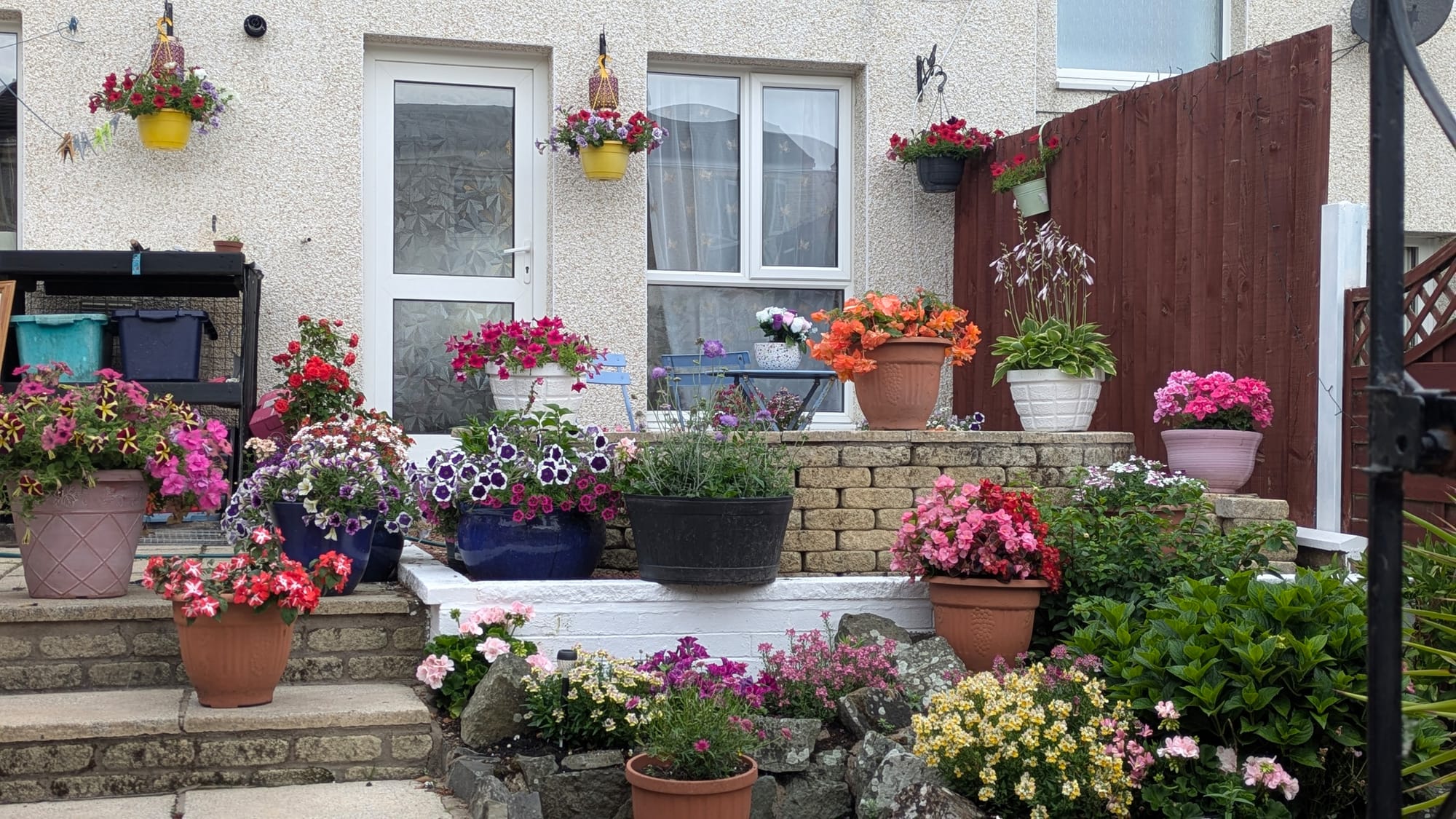
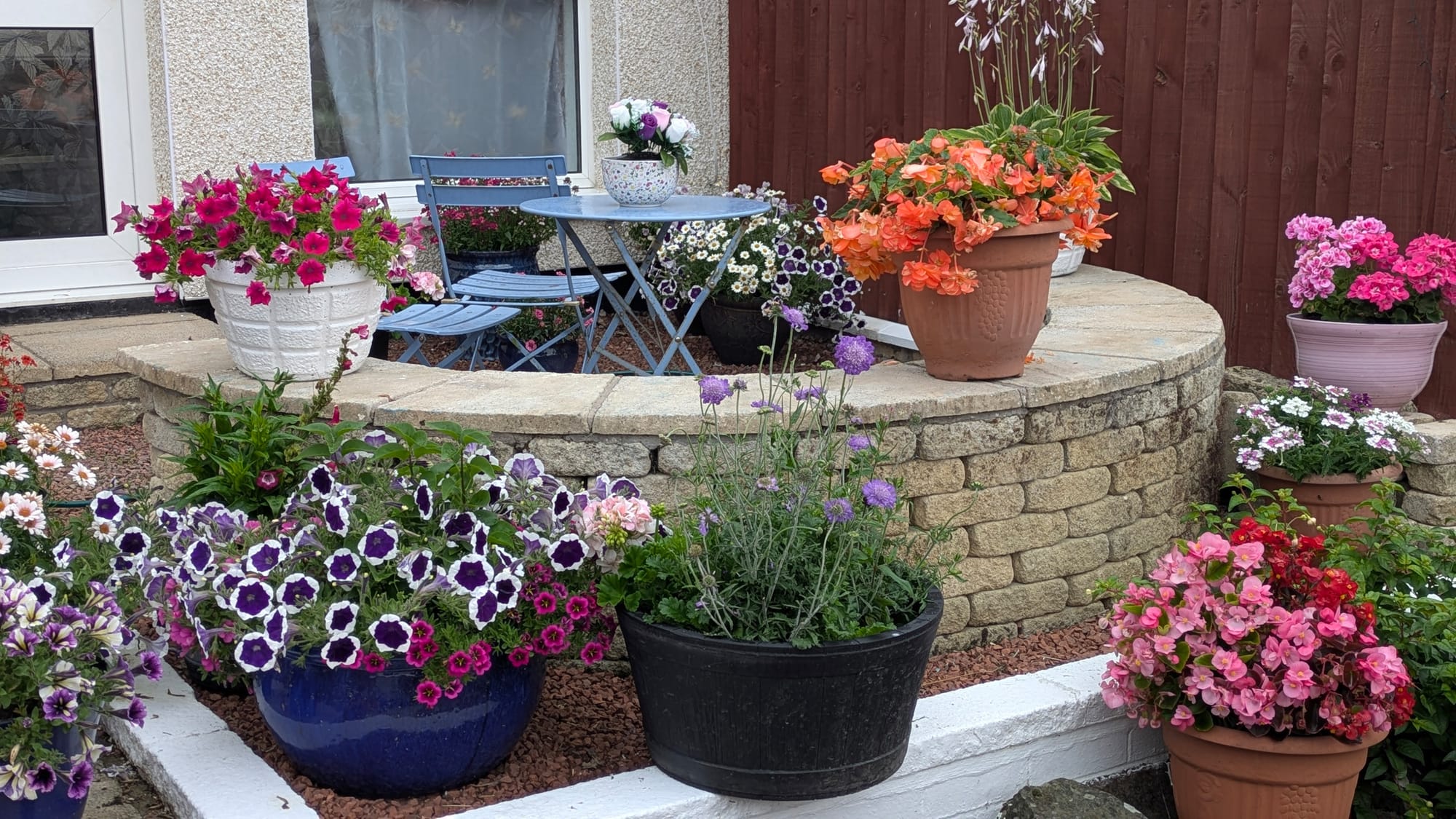
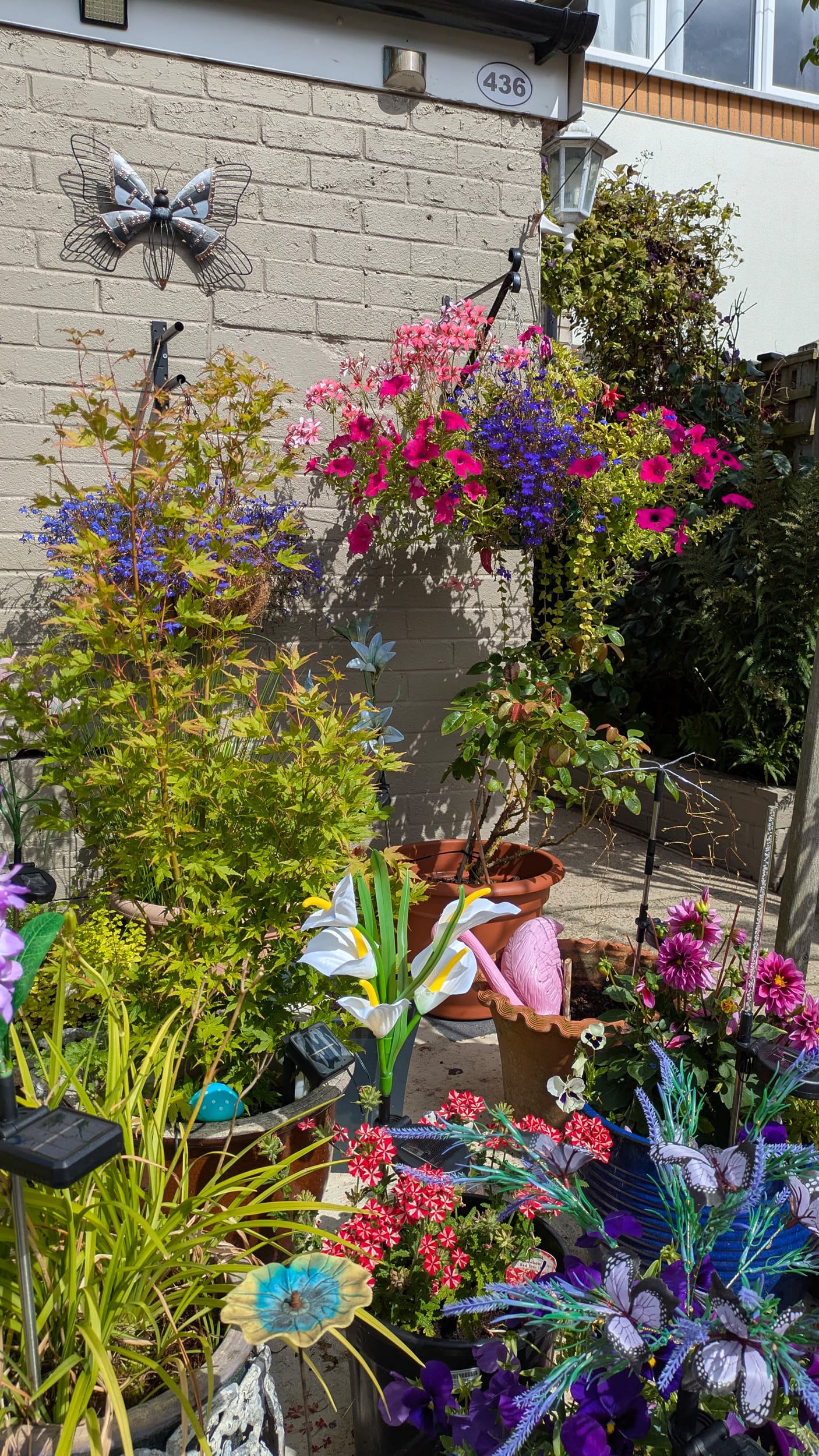
There’s a bit of that where I live, but mostly there are pots sprawling with colour; orderly little borders with summer bedding spilling across paths; decades-old lavender lovingly trimmed each year so it doesn’t grow woody.
Grace, she of the enviable clematis, has lived here for over 30 years. Her garden has grown and then shrunk as she’s raised a family, nursed a husband and then, with the frailties of osteoporosis, cared for herself.
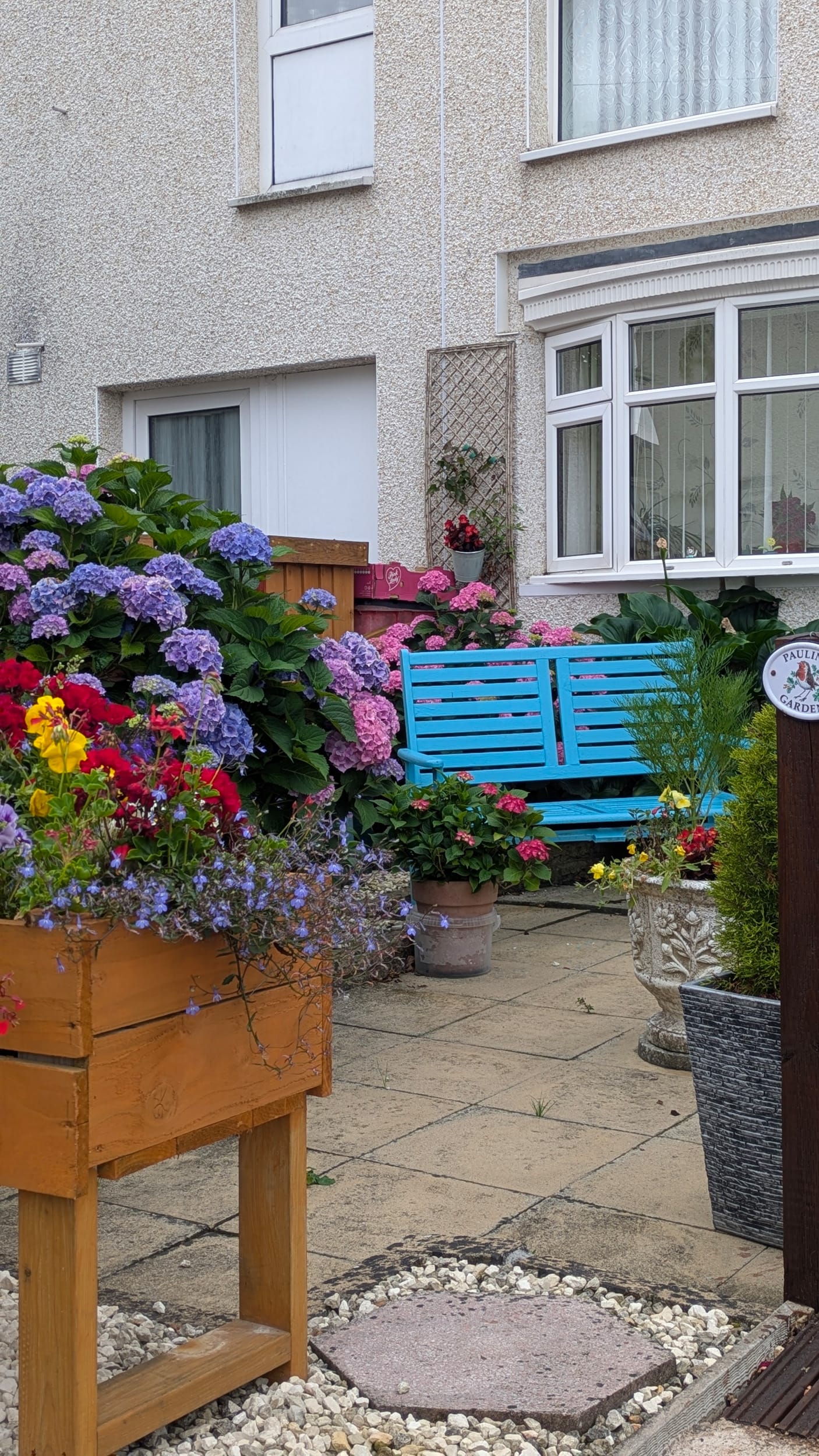
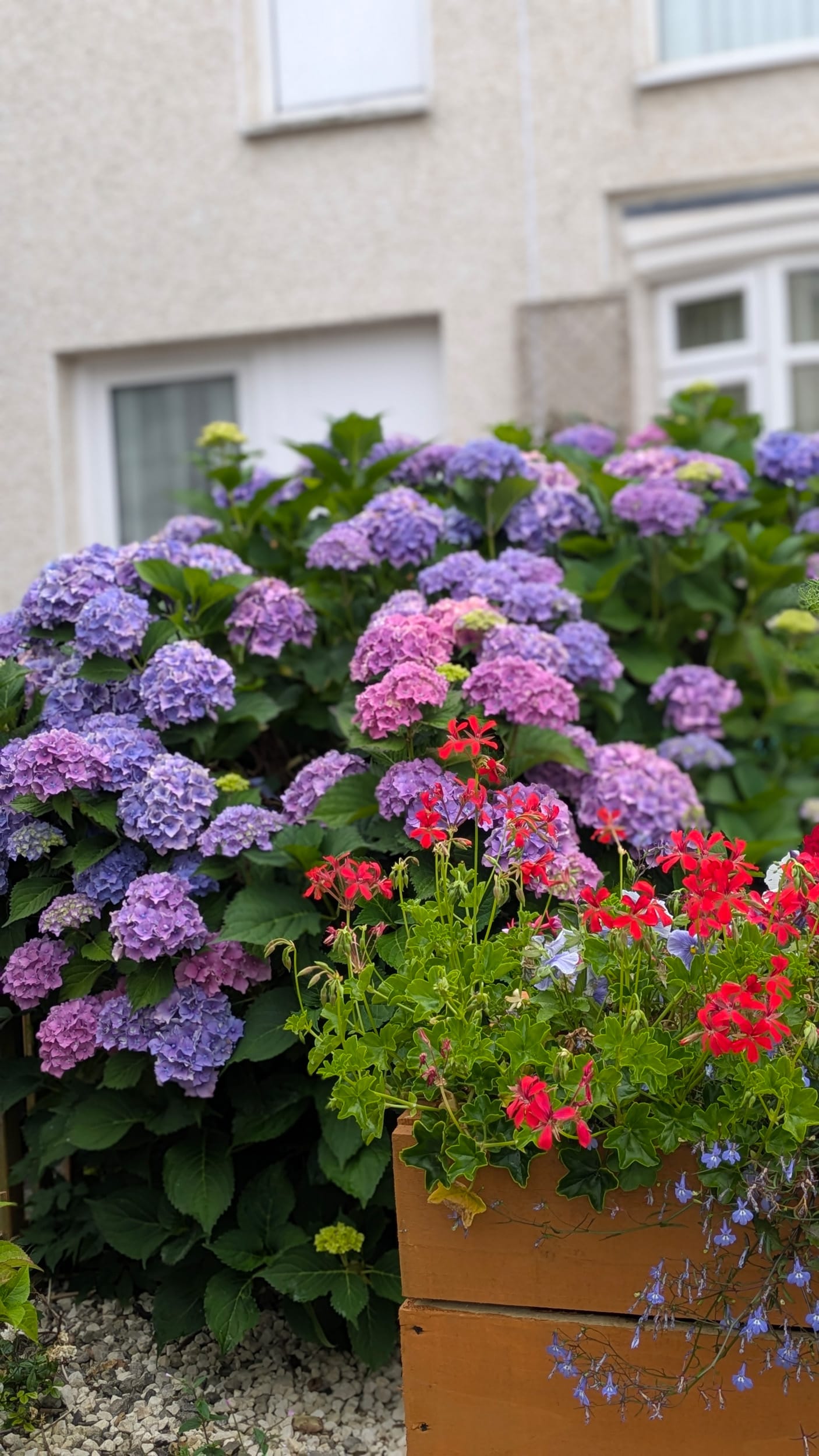
Her garden is neat as a pin, roses cut to the ground each autumn, blue hydrangeas putting everyone to shame, troughs and planters – a concession to age – full of bulbs and bedding. Hers is one of the few homes in her close to still have a front garden. Years ago, the council, responding to calls for more parking, tarmacked over grass, but even the drives here are smart. Strings of solar lights glint on early autumn nights, B&M fake hanging baskets bobbing in the wind.
Our estate, built in the 70s to bring in workers from the Midlands and Liverpool to work in factories over the Welsh border, has none of the sprawling gardens of the neighbouring estate. There, they have ‘homes fit for heroes’ – council houses built in the interwar years with long plots, which are now filled with trampolines. Built to assuage returning soldiers' demands for a better life, and the state’s perceived threat of Bolshevik uprisings of the early 20th century, these council homes offered outdoor space and spare bedrooms to working families used to the cramped collective living of tenements and slums.
Then Prime Minister, David Lloyd George argued, “Britain would hold out against the dangers of Bolshevism, but only if the people were given confidence, only if they were made to believe things were being done for them.” [1]
Now-sneered-at privet hedges and the later out-of-control leylandii offered the luxury of privacy to tenants, a few veggies at the back of the lawn, and rows of beans attracting the bees, which staggered drunk from flowerbeds full of busy Lizzie, lobelia, begonia, and pillows of white alyssum spilling over crazy paving.
With estate gardening clubs, a yearly subscription meant you could borrow the collective lawnmower and roller when you needed. This was gardening as an opiate to the working classes: homes for families who rejected a return to the old social order; revolution and social change stayed with saxifraga and sedum.
The bones of those gardens are still visible today, but most were sold off in the great right-to-buy destruction of council-let homes. The gardens on our estate, built decades later, are smaller, meaner, lacking in all that space to breathe. Some are no bigger than a yard, but still lovingly tended. A postage stamp of lawn surrounded by well-ordered little borders. Space left around each plant, and windmills and windchimes bringing more cheer.
This is a style of gardening sneered at by ‘proper’ gardeners, and by ‘proper’ we mean those whose ‘land’ spreads across acres. With their ramshackle, more naturalistic style, these ‘proper’ gardens are all Latin names and Gertrude Jekyll.
There was a shift in the 90s and early 2000s, when gardening columns, and then TV makeover shows, disparaged our bright, ordered borders of bedding and bulbs as “boring” and “lacking in taste”, and our gardening was somehow reduced. [2]
Garden writers like Christopher Lloyd advocated ‘country house living’ as the gardening we were meant to aspire to. Articles in the ever-growing gardening magazines advisedHow to Turn Your Small Plot into a Stately Paradise as we were encouraged to plant shrubs and mixed herbaceous borders in complementary shades. Not the gaudiness of lurid colours and, more recently, the addition of fake flowers, solar-powered fairies and bobbing plastic butterflies. There’s taste, so we’re told, we just don’t have it around here.
There was a time when the only thing my husband and I really argued about was gardening. A trained gardener, he loved the styles of Christopher Lloyd and Beth Chatto, knew all the Latin names and the right way to do things. He liked to visit a plant nursery while I, self-taught, wandered up and down the aisles of summer bedding in the garden centre, gorging on colour, and the rules be damned.
Ignoring the rules, the gardens around here are created with joy, signifying a sense of community and respectability. Everyone I spoke to as I wandered the estates said the same thing when I asked.
They spoke of how they’d created something that was theirs; they stressed the work put in, and the plans of things to come. Digging up over there, replanting over here, apologising for the mess when there was none to see. There was a pride in keeping their space spick and span, often offered up in contrast to the state of neighbours’ gardens, spilling with weeds and scattered plastic recycling.
“I learned gardens from my father,” one woman who has lived in her council house for 47 years tells me, her garden awash with colour and brightly coloured ornaments from Temu. “He always said what was on the outside reflected what was on the inside.” She indicated her front windows. “You know people will have a tidy house if their garden is nice.”
I know this in my bones. I feel it when my own front garden gets a little unruly – the litter, blown in from bin day, still uncollected; my health limiting my tidying up. My husband laughs, joking about me cleaning my front step, but I worry about what people will think if they see the state it’s in.
When a police raid smashed in doors down the road, my first reaction was surprise, because that house had ever such a lovely garden. Always tidy, with nice pots; not the type to have the police knocking at the door.
Front gardens are often for other people. Not many of us sit out in our front step, though many here still bring a chair out into the close for a cuppa and a chat. Another sign of our lack of our sophistication and taste.
Front gardens are an advertisement of respectability, a way to show you are capable of taking care of you and yours, a kickback at the story that others tell about ‘people like us’, living around here. It reinforces connection with your neighbours and your community, themes replicated in Lisa Taylor’s 2008 study of gardening class and gender. [3]
“I love my garden,” says one woman, proudly showing me around. “Me and next-door share plants. If I’ve got too much of something I pass it to her, and she does the same with me.”
Gardening brings with it a sense of social cohesion, a sharing of community, of ideas, and the coming together of cultures, even if all you want is a spot to sit and enjoy the sun. There is judgement and disapproval, don’t get me wrong, but on the estates here, the mostly women gardeners are always keen to share a cutting or a solution or five minutes of their day.
Gardens ground us in our histories. I, like many others, can tell you the story of my plants:
“I planted that one when my father died.”
“My mother-in-law gave me a clump from her garden.”
“I got that one from my neighbour, Liz, before she moved away.”
In lockdown, I waved at neighbours with offers of tomato plants, having accidentally grown over 25 varieties in a Covid-induced stupor. Gardeners are nothing if not generous.
It’s not just plants, either. When my neighbour was moving into a care facility, I gratefully accepted her stone elephants and comical cow statues into my own plot, a daily reminder of her place in the world and her stories. Gardens are a step into our collective histories if you care to take a look.
But what now, for the future of gardens? One in eight households have no access to a garden (one in five, in London). People of colour are four times more likely to have no access to outdoor space at their home. You are three times more likely to have no access to a garden if you are unemployed, or in casual, semi-skilled or unskilled work. [4]
Many of the less tended gardens here are privately rented. That’s not a judgement, just an observation. With six-month tenancies still common, tenants can’t put up a poster, let alone make a garden, without their landlords’ permission.
Such insecurity is the opposite of the gift of a council house with a secure tenancy, which affords not just the space to build a home, but also space to build a future. It’s hard to plan your life or dream big plans or sow new seeds if you are worried about whether you can afford the rent next month or next year. Insecurity of housing does not make a garden grow. It does not make people flourish and thrive and take up space. Growing gardens is about decades, not days.
“Why should I bother?” a woman in the row behind me says, while admiring my garden. “I’d love this,” she gestures to ten-year-old roses, “but why would I invest my time and money in someone else’s house?”
It is hard to have a sense of belonging when you don’t have the chance to make connections, to put down roots, to make a space your own.
It is hard to have pride in where you come from when you’re told it’s a shithole, that only scallies and troublemakers live there; when lack of investment and underfunding over decades have stripped services to the bone.
But still we do. In the face of so much social exclusion, taking pride and ownership of where you live, in raising a garden, is an act of political resistance.
Maybe rather than the opiate of the masses, gardening could lead the revolution, bringing us all together one seed packet at a time.
Oh, and answer to my wilting clematis? Grace says chopped up banana peels steeped in a watering can should do the trick! ---
All donations go towards supporting the Bee’s mission to nurture, publish promote and pay for the best new working-class writing.




Comments